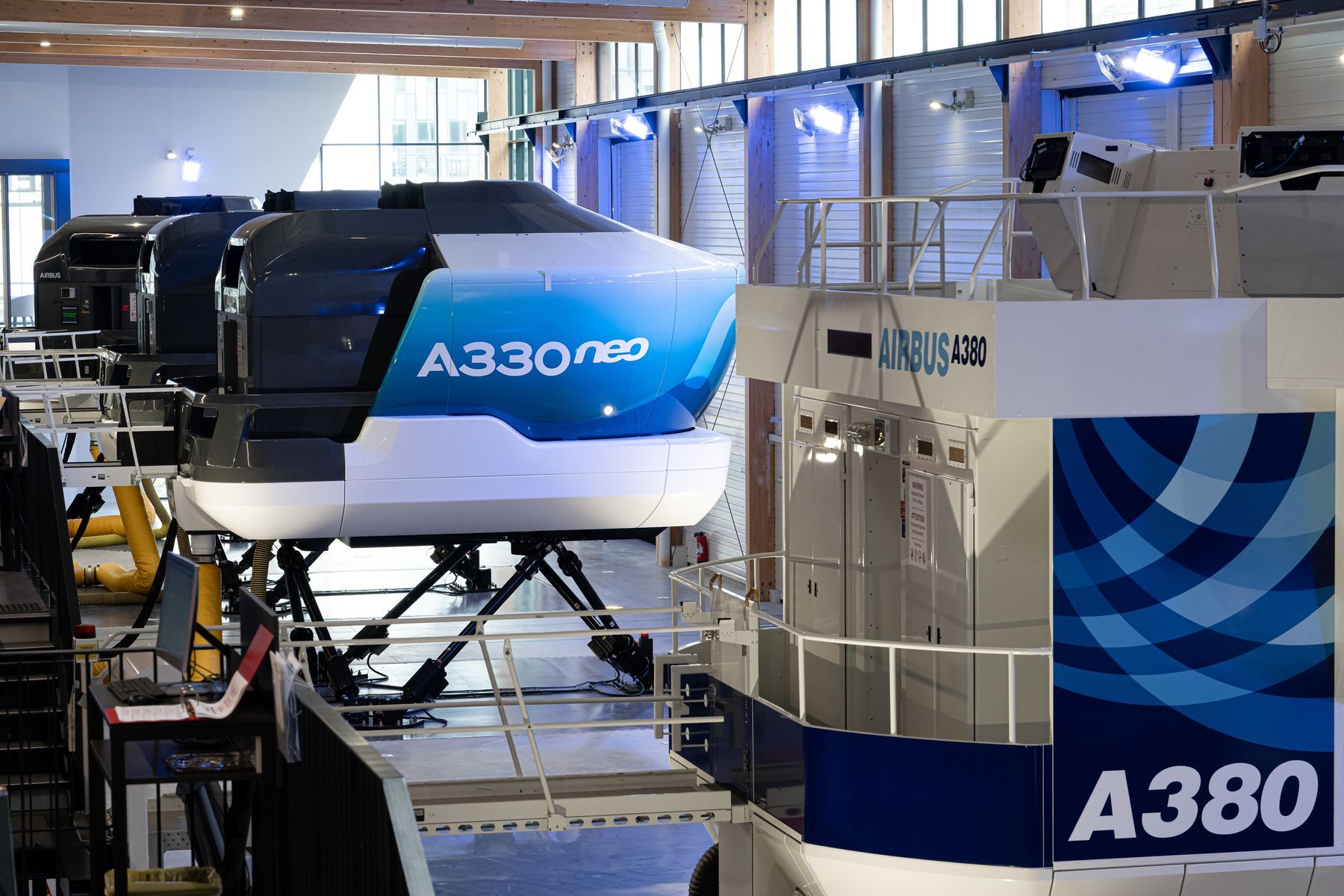
Picture credits: Airbus
 Click to view
June 15, 2026
Global – Airbus has outlined a three-pillar transformation of its pilot and maintenance training philosophy, anchored by the completion of a full revision of its pilot curriculum to the latest ICAO Competency-Based Training and Assessment (CBTA) standards, the deployment of the Virtual Procedure Trainer (VPT) as a bridge between classroom and full flight simulator, and the launch of a new suite of Developer Upskilling and Consulting services for airlines transitioning to CBTA and Evidence-Based Training (EBT).
- In February 2026, Airbus completed the revision of its entire pilot curriculum, including a full-scale update of all type rating courses to the latest ICAO CBTA standards — a process initiated with the A350 type rating course in 2015. The updated model defines pilot training around nine core competencies, including both technical skills and non-technical competencies such as leadership, teamwork, communication, and workload management.
- The shift from task-based to competency-based training reflects the industry's recognition that modern aviation accidents and safety shortfalls are increasingly attributable to breakdowns in human decision-making and situational awareness rather than single mechanical failures; CBTA addresses these human factors directly by building resilience, decision-making confidence, and the ability to manage unforeseen situations.
- Since implementing CBTA across its programs, Airbus has recorded fewer training remedials, with the model generating feedback loops from operational data, Safety Management System data, and training data that allow per-airline performance analysis and targeted improvement.
- The Airbus Virtual Procedure Trainer (VPT) is a cloud-based software tool enabling pilots to master normal cockpit procedures in a flat-screen or 3D virtual environment before entering a high-fidelity Full Flight Simulator, replacing the previous step of studying static 2D cockpit posters. The VPT reduces time spent on procedural familiarisation within FFS sessions, freeing simulator time for richer operational scenarios and CBTA-aligned instructor assessment of non-technical competencies.
- Airbus has also launched a new Developer Upskilling and Consulting suite comprising three distinct offerings: CBTA and EBT Developer Courses teaching airlines to design their own operationally-grounded training programs; CBTA and EBT Instructor Standardisation ensuring consistent competency grading across an airline's instructor network; and EBT Implementation Support to guide full training footprint transitions to the CBTA model.
Statements
- "Since 2015 when we implemented CBTA into the A350 type rating course (and subsequently into all Airbus' programmes) there have been fewer remedials in our flight training. With the model that we use, we receive the feedback from operations data, from the Safety Management System (SMS) data, and from the training data. That comes back per airline, and with data analytics we'll be able to focus on any areas for improvement in an airline, in their operations," said Susannah Crabol, Flight Training Strategic Portfolio Manager at Airbus.
- "Through the tool pilot trainees receive a good view of the procedures in a well simulated cockpit, so that when they enter the full flight simulator, they know the related 'flow patterns' already. They don't lose time on working on them inside the full flight simulator and they know they have another tool dedicated to that to be better prepared before entering the FFS. This time saving step is critical, as the VPT stage frees-up space downstream in the dense FFS sessions for richer, more realistic operational scenarios and for the instructor to assess the pilot's non-technical competencies, such as decision-making and crew resource management, in line with CBTA principles," said Sylvain Vacher, Training Services Marketing Director at Airbus.
Source: Airbus
You may also check our Terms and Conditions for our Content Policy. Searching for specific information - kindly contact us to see if we can assist you.
Related News
Share
Loading Ad...
Recommend this Post
Please fill out the form below and the AFM platform will send this post via email to your preferred recipient