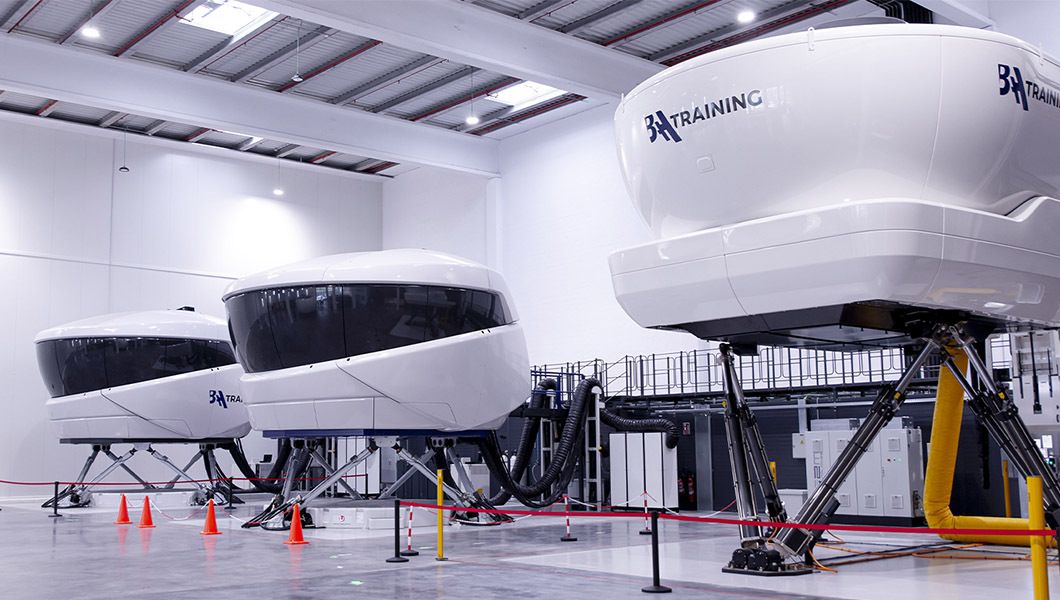
Picture credits: BAA Training
 Click to view
March 27, 2026
Global – BAA Training, a global aviation training organisation delivering ab initio and type rating training, has published analysis on the accelerating adoption of Airline Pilot Standards Multi-Crew Cooperation (APS MCC) as a First Officer recruitment requirement among European carriers, highlighting the structural shift underway in pilot preparation standards.
- APS MCC was introduced by EASA in 2017 and began gaining broader visibility around 2018, but adoption accelerated significantly between 2021 and 2024 when major European low-cost carriers — including Wizz Air, Ryanair, and easyJet — began specifying it as a preferred or required qualification in First Officer recruitment, reflecting a shift toward recruiting pilots already familiar with airline-style operational environments.
- APS MCC integrates and expands both Multi-Crew Cooperation (MCC) and Jet Orientation Course (JOC) elements into a single airline-oriented framework, placing greater emphasis on airline-style Standard Operating Procedures (SOPs), Competency-Based Training and Assessment (CBTA), and Evidence-Based Training (EBT) — a substantive evolution from the previously separate MCC and JOC modules which were delivered in generic training environments not structured around realistic airline operational workflows.
- The LCC adoption of APS MCC is driven by structural incentives including operational standardisation, reduction in type rating risk and costs, CBTA alignment, and the need to manage high training output volumes efficiently; legacy carriers, which have historically relied on integrated cadet programmes or internal training pipelines, are now also moving to integrate APS MCC into their recruitment requirements.
- The primary barrier to broader adoption is simulator and instructor availability: APS MCC requires FNPT II or higher-level devices capable of replicating an airline-style environment, and instructors must hold strong airline operational experience — creating capacity and standardisation demands that smaller operators and those with lower recruitment volumes may struggle to meet.
BAA Training positions itself as having already overcome these infrastructure and instructor standardisation challenges, with its own FFS/FTD fleet, experienced instructor pool, and approximately 100,000 flight hours delivered annually across its simulator center's in Spain, France, Lithuania, and Vietnam.
About BAA Training
BAA Training is a global aviation training organization delivering both Ab Initio and Type Rating training. BAA Training operates simulator centers in Spain, France, Lithuania, and Vietnam, a global sales representative office in Dubai, UAE, and two consultancy centers in India: New Delhi and Bengaluru. As one of Europe’s select EASA-standard Approved Training Organizations (ATOs) handles approximately 100,000 flight hours annually on its own FFS/FTD devices, providing Type Rating to over 1,200 pilots and serving more than 100 airlines and 300 private customers. The organization owns a range of FFSs and FTDs for Airbus A320, Boeing 737 MAX, Boeing 737 NG, Boeing 737 CL, and Boeing B747-400 types. Additionally, it has access to a network of 60 partners’ FFSs in 22 global locations. On the Ab Initio side, the academy has a Flight School in Spain, offering ATPL Integrated and MPL programs.
Source: BAA Training
You may also check our Terms and Conditions for our Content Policy. Searching for specific information - kindly contact us to see if we can assist you.
Related News
Share
Loading Ad...
Recommend this Post
Please fill out the form below and the AFM platform will send this post via email to your preferred recipient