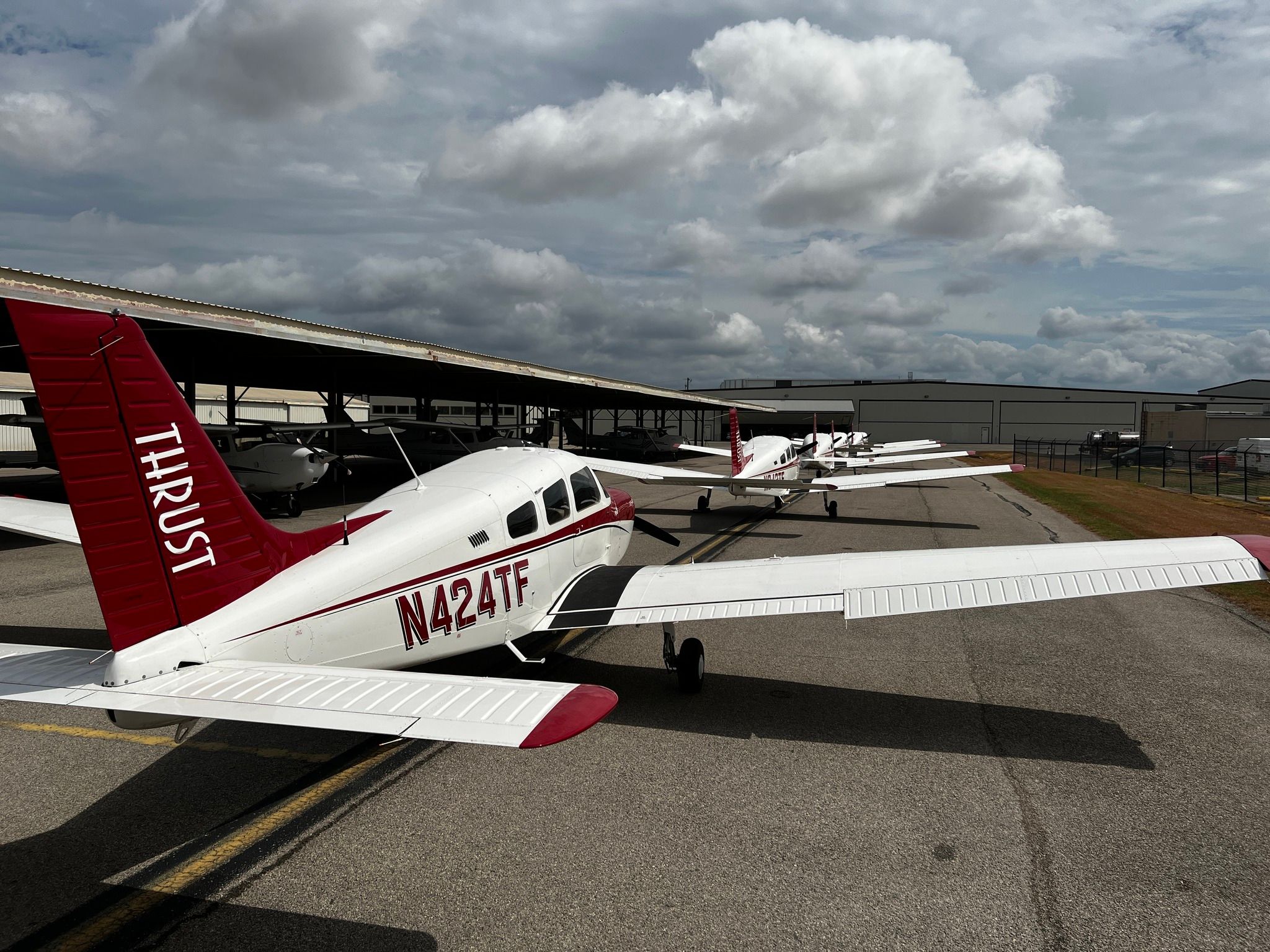
Picture credits: Thrust Flight
 Click to view
March 17, 2026
Arizona, USA - A coalition of flight schools, aviation businesses, pilots, and training stakeholders based at Falcon Field Airport in Mesa, Arizona has formally urged the Mesa City Council to reject a proposed per-landing fee program, warning that the measure could negatively impact pilot training activity and the regional aviation workforce pipeline.
- In a letter, dated March 12, 2026, addressed to Mayor Mark Freeman, Vice Mayor Scott Somers, and members of the Mesa City Council, aviation stakeholders argued that per-landing fees disproportionately affect training airports where student pilots conduct repeated takeoffs and landings as part of their training curriculum.
- Flight training often involves multiple landings during a single lesson, meaning a per-landing fee structure could significantly increase the cost of pilot training or reduce training repetitions required for skill development.
- Stakeholders warned that either outcome could slow student progress, delay certification timelines, and further constrain the pilot and aircraft mechanic workforce pipeline.
- The group also highlighted potential economic impacts for Falcon Field’s airport-based ecosystem, which includes instructors, maintenance providers, fueling operations, aircraft rental businesses, and other aviation service providers.
- A reduction or relocation of training activity could lead to declining student numbers, fewer flights, reduced maintenance demand, and lower revenue for airport businesses, according to the letter.
- The aviation community acknowledged local resident concerns regarding airport activity but urged the city to pursue balanced solutions developed through stakeholder collaboration, rather than implementing a landing-fee model targeting high-frequency training operations.
- Additional concerns were raised about the administration and enforcement of a landing-fee system, noting that high operational volumes require accurate and transparent billing mechanisms to avoid disputes and operational complications.
The letter reads:
"We are the undersigned flight schools, pilots, aircraft owners, instructors, FAA-designated evaluators, mechanics, airport-based businesses and aviation stakeholders at Falcon Field Airport in Mesa, Arizona. We’re writing to urge the Mesa City Council to reject the proposed landing-fee program.
A per-landing fee may look like a straightforward revenue tool. At a training airport, it works differently. Flight training is built around repeated takeoffs and landings. Students often complete multiple landings in a single lesson, sometimes several in a short period of time. A fee charged per landing stacks up quickly and either raises the price of training or forces fewer training reps. Either outcome slows progress, delays certification and narrows an already strained pipeline of pilots and aircraft mechanics.
This proposal would also ripple through the Falcon Field economy. Training activity supports instructors, maintenance shops, line service, fuel sales, aircraft renters and the small businesses that operate on the field. When training traffic drops or relocates, the impact is immediate: fewer students, fewer flights, less maintenance work and less revenue that helps sustain airport services and businesses. Once that ecosystem shrinks, rebuilding it is difficult.
We understand some residents are frustrated by airport activity. We’re not asking the City to ignore those concerns. We are asking for solutions that are balanced and workable. A steep landing fee aimed at the highest-frequency operations does not solve the underlying issue. It shifts training to other airports, concentrates traffic elsewhere in the region and leaves Mesa with fewer jobs and less workforce development.
We’re also concerned about how a landing-fee system would be tracked and enforced. With a high volume of operations, the billing method has to be accurate, transparent and fair. Any program that creates disputes, errors or inconsistent enforcement will undermine trust and could introduce unintended safety pressures.
Falcon Field’s role in aviation training and local commerce is not incidental. It’s one of the reasons the airport exists and it’s a major reason businesses and jobs are here. Numerous efforts have been made to meet with City leaders and elected officials to pursue collaborative, practical solutions, but those requests have too often been met with silence or deferral. We urge the City Council to vote no on the landing-fee proposal and commit instead to a stakeholder process that includes airport users, businesses, residents and aviation groups working toward practical steps that address community concerns without damaging Falcon Field’s long-term health."
- The signatories were:
About Falcon Field Airport Falcon Field Airport in Mesa, Arizona is a major general aviation airport supporting flight training organizations, aviation businesses, and maintenance providers. The airport serves as an important hub for pilot training activity in the region and contributes to local aviation workforce development.
Source: Thrust Flight
You may also check our Terms and Conditions for our Content Policy. Searching for specific information - kindly contact us to see if we can assist you.
Related News
Share
Loading Ad...
Recommend this Post
Please fill out the form below and the AFM platform will send this post via email to your preferred recipient